Aussie Fails to Rally Despite Bullish Tailwinds. Forecast as of 11.08.2026
When a currency fails to move in the expected direction, it is more likely to head the other way. Unfortunately, neither the RBA's hawkish rhetoric nor the rallies in the S&P 500 and the yuan are providing much support for the AUD/USD pair. Let's take a closer look and develop a trading plan.
Major Takeaways
- The RBA kept the cash rate at 4.35%.
- The AUD/USD is lagging behind the S&P 500 rally.
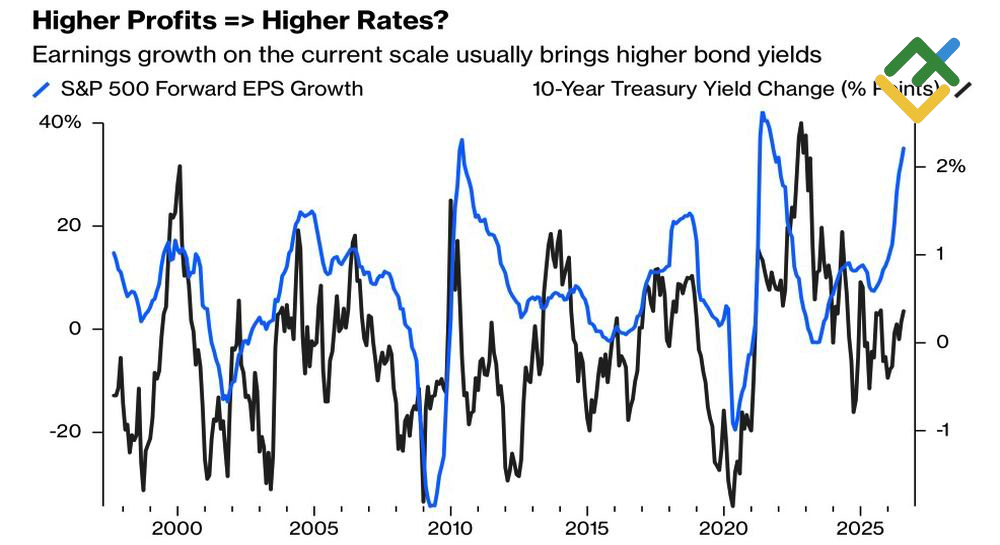
- US corporate earnings are fueling inflation.
- Weak CPI data could provide an opportunity to sell AUD/USD, targeting 0.7000.
- The RBA kept the cash rate at 4.35%.
- The AUD/USD is lagging behind the S&P 500 rally.
- US corporate earnings are fueling inflation.
- Weak CPI data could provide an opportunity to sell AUD/USD, targeting 0.7000.
Weekly Fundamental Forecast for Australian Dollar
The Australian dollar has several advantages, yet victory is slipping away. The Reserve Bank continues to discuss raising interest rates, the S&P 500 recently hit a record close, and seasonal factors point to an imminent strengthening of the Chinese yuan, for which the aussie serves as a proxy currency. Nevertheless, the AUD/USD is in no hurry to rise. If the market is not moving in the expected direction, it is likely to move in the opposite one.
The Australian dollar has several advantages, yet victory is slipping away. The Reserve Bank continues to discuss raising interest rates, the S&P 500 recently hit a record close, and seasonal factors point to an imminent strengthening of the Chinese yuan, for which the aussie serves as a proxy currency. Nevertheless, the AUD/USD is in no hurry to rise. If the market is not moving in the expected direction, it is likely to move in the opposite one.
The Reserve Bank of Australia kept its key interest rate at 4.35% at its August 11 meeting. RBA Governor Michele Bullock noted that monetary policy had been tightened three times since the start of the year and that the RBA would do so again if necessary. Financial conditions have tightened, and the economy is slowing slightly, as expected following a 75-basis-point increase in borrowing costs. However, inflation remains high.
On paper, this hawkish stance should have supported AUD/USD quotes, given that Australian bonds responded to Michele Bullock's speech with rising yields. At the same time, the futures market continues to price in a 60% probability of a 25-basis-point cash rate hike by December. However, in reality, the aussie has been unable to capitalize on the door left open to further monetary tightening.
Central Banks' Interest Rates
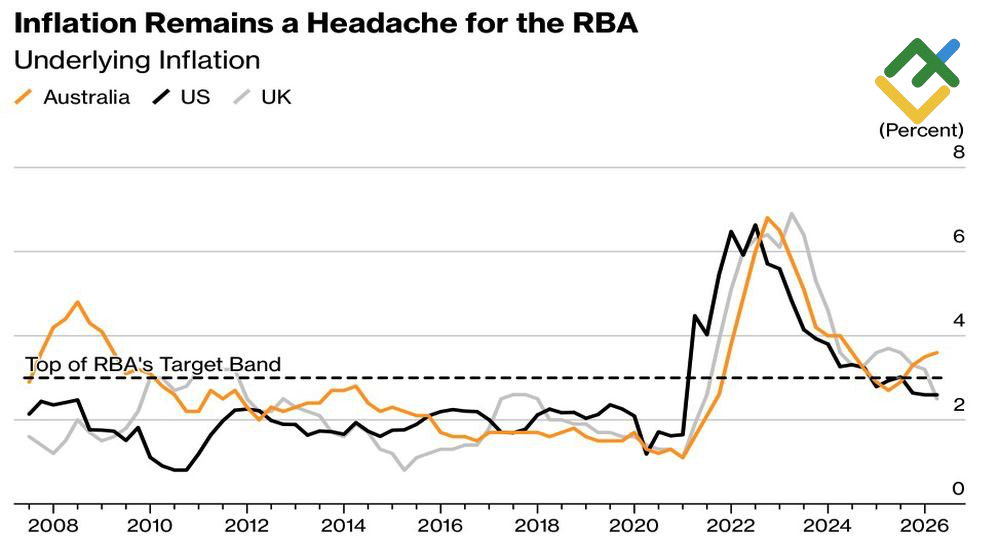
Source: Bloomberg.
Source: Bloomberg.
The Reserve Bank's interest rate is higher than that of many other central banks, making the Australian dollar a yield-seeking currency that, in theory, should be sensitive to shifts in global risk appetite. Against this backdrop, the S&P 500 rally has long supported the AUD/USD. However, the stock market's rise may contain the seeds of its own reversal.
Publication date: