
Oil Slides as Geopolitical Risk Premium Unwinds
Key Takeaways:
*Oil prices plunged after US-Iran peace progress triggered the removal of geopolitical risk premiums tied to the Strait of Hormuz.
*Markets are pricing in improved global supply expectations as Iranian exports and shipping routes are expected to gradually normalize.
*The Strait of Hormuz remains a critical energy chokepoint, handling around 20% of global oil and LNG flows under normal conditions.
*Oil prices plunged after US-Iran peace progress triggered the removal of geopolitical risk premiums tied to the Strait of Hormuz.
*Markets are pricing in improved global supply expectations as Iranian exports and shipping routes are expected to gradually normalize.
*The Strait of Hormuz remains a critical energy chokepoint, handling around 20% of global oil and LNG flows under normal conditions.
Market Summary:
Oil remains the asset most directly affected by recent geopolitical developments. The announcement that the United States and Iran have reached a framework agreement to end hostilities and reopen the Strait of Hormuz triggered a sharp collapse in crude prices, with Brent and WTI falling more than 4–5% in a single session and extending their decline from recent conflict-driven highs. The Strait of Hormuz is one of the world’s most strategically important energy corridors, handling roughly 20% of global oil and LNG flows under normal conditions. Markets have rapidly removed a significant portion of the geopolitical risk premium that had accumulated since the conflict began.
Oil remains the asset most directly affected by recent geopolitical developments. The announcement that the United States and Iran have reached a framework agreement to end hostilities and reopen the Strait of Hormuz triggered a sharp collapse in crude prices, with Brent and WTI falling more than 4–5% in a single session and extending their decline from recent conflict-driven highs. The Strait of Hormuz is one of the world’s most strategically important energy corridors, handling roughly 20% of global oil and LNG flows under normal conditions. Markets have rapidly removed a significant portion of the geopolitical risk premium that had accumulated since the conflict began.
The prospect of Iranian exports returning to global markets, combined with the normalization of shipping routes and the eventual removal of mines and logistical bottlenecks, has substantially improved supply expectations. Energy traders are increasingly pricing in a scenario where Middle Eastern crude flows gradually return to pre-war levels, reducing fears of a prolonged supply shock. This has also contributed to lower inflation expectations globally, supporting broader risk assets and easing pressure on central banks.
Nevertheless, downside risks may not be entirely straightforward. Several analysts have cautioned that restoring full shipping capacity through the Strait of Hormuz could take weeks or even months. Tanker backlogs, damaged infrastructure, de-mining operations, and uncertainty surrounding future nuclear negotiations all present potential obstacles. Additionally, some energy market experts warn that once global demand strengthens and strategic reserves begin to be replenished, crude prices could stabilize or even recover later in the year. Therefore, while the immediate reaction remains bearish, medium-term volatility is likely to remain elevated.Overall, oil markets remain highly sensitive to developments between Washington and Tehran. While optimism over a potential agreement has pressured crude prices lower, any delay in confirmation or rejection from Iran could quickly revive supply concerns and trigger renewed volatility.
Technical Analysis
Crude Oil, H4:
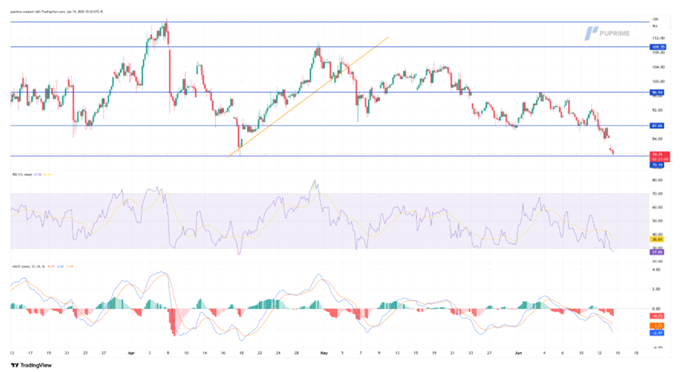
Crude oil remains under heavy bearish pressure after decisively breaking below several key support levels. The recent selloff has accelerated toward the major support zone around 79.20, with price now testing the lowest levels seen since the April recovery. The breakdown below 87.65 confirms a continuation of the broader downtrend and signals that sellers remain firmly in control.
Momentum indicators continue to reinforce the bearish outlook. The RSI has fallen to around 27, entering oversold territory and highlighting the intensity of the recent decline. While oversold conditions may trigger short-term rebounds, they do not yet indicate a trend reversal. Meanwhile, the MACD remains deeply negative, with widening bearish separation between the MACD and signal lines and expanding negative histogram bars, reflecting strong downside momentum.
Overall, crude oil remains firmly bearish in the short term. Although the oversold RSI suggests the possibility of a corrective rebound, the prevailing trend continues to favor the downside while price remains below 87.65. Traders may watch for either a decisive break beneath 79.20 to extend losses or signs of stabilization around current support that could trigger a temporary relief rally.
Resistance Levels: 87.65, 96.95
Support Levels: 79.20, 67.95
Support Levels: 79.20, 67.95
Publication date: