
Oil Prices Tumble as U.S.–Iran Deal Optimism Eases Supply Disruption Fears

Key Takeaways:
*Oil prices fall sharply on optimism surrounding a potential U.S.–Iran agreement
*Possible reopening of the Strait of Hormuz improves supply outlook
*Markets unwind geopolitical risk premium in crude oil
*Investors await official confirmation and details of the agreement
*Oil prices fall sharply on optimism surrounding a potential U.S.–Iran agreement
*Possible reopening of the Strait of Hormuz improves supply outlook
*Markets unwind geopolitical risk premium in crude oil
*Investors await official confirmation and details of the agreement
Market Summary
Crude oil prices dropped sharply as improving optimism surrounding a potential agreement between the United States and Iran significantly eased fears of prolonged supply disruptions in global energy markets.
Crude oil prices dropped sharply as improving optimism surrounding a potential agreement between the United States and Iran significantly eased fears of prolonged supply disruptions in global energy markets.
Over the weekend, Donald Trump stated that an agreement with Tehran had been “largely negotiated,” with final details expected to be announced soon. Trump also indicated that the proposed deal would include the reopening of the Strait of Hormuz, although further details were not disclosed.
The Strait of Hormuz remains one of the world’s most critical energy shipping routes, handling a substantial portion of global crude oil and liquefied natural gas flows. The prolonged disruption and military tensions in the region had previously pushed oil prices sharply higher due to fears of tightening supply conditions.
However, the latest diplomatic developments have significantly shifted market sentiment. Trump also revealed that he had held productive discussions with leaders from Saudi Arabia, the United Arab Emirates, Qatar, and other regional countries regarding a broader peace framework. He later described the agreement as largely finalized, pending final confirmation from the United States, Iran, and other involved parties.
Following the developments, global energy markets reacted aggressively, with crude oil prices falling to their lowest levels in more than two weeks during early Asian trading. Investors rapidly unwound geopolitical risk positions as expectations grew that energy flows through the Strait of Hormuz could gradually normalize if negotiations succeed.
The sharp decline in oil prices also reflected easing fears surrounding global inflation and supply shortages, which had become major concerns during the prolonged conflict.
Despite the recent selloff, uncertainty remains elevated as markets are still waiting for official confirmation and clearer details regarding the structure and timeline of the proposed agreement. Any unexpected setback or failure in negotiations could quickly reverse sentiment and trigger renewed volatility in crude oil prices.
Overall, oil markets are now being driven primarily by geopolitical headlines, with the potential reopening of the Strait of Hormuz remaining the key catalyst for future price direction.
Technical Analysis
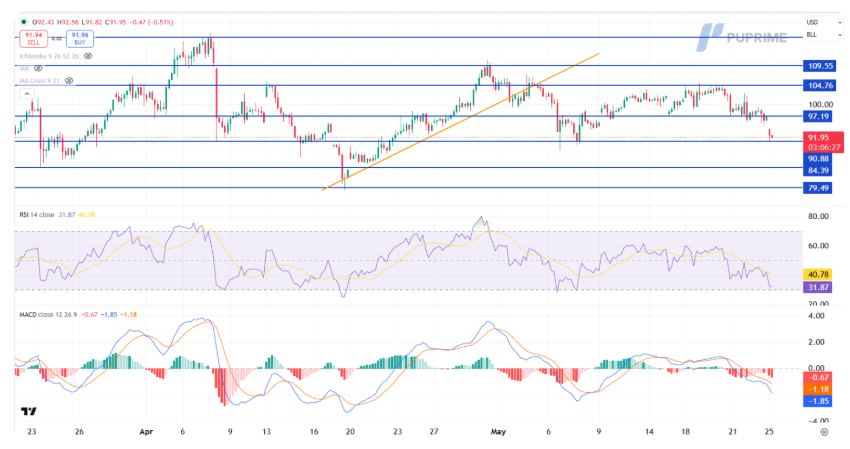
CL-Oil, H4:
Crude oil prices are trading lower, currently testing the 90.90 support level, which serves as a key near-term floor.
Momentum remains bearish, with the MACD strengthening to the downside and the RSI at 32 below the midline, indicating sustained selling pressure and continued downside risk.
A confirmed breakdown below 90.90 could extend losses toward the next support at 84.40, with further downside possible if bearish momentum accelerates.
However, if selling pressure begins to weaken, a technical rebound may occur, with prices likely to retest the 97.20 resistance level, followed by 104.75 if recovery strengthens.
Resistance Levels: 97.20, 104.75
Support Levels: 90.90, 84.40
Support Levels: 90.90, 84.40
Publication date: