US Dollar Hits 19-Month High as Anthropic IPO Lifts Stocks

Global financial markets are showing mixed signals on Thursday as investors balance expectations of further Federal Reserve interest rate hikes against renewed optimism surrounding the artificial intelligence sector. The US Dollar has climbed to a 19-month high, while US stock futures are recovering ahead of Anthropic's highly anticipated stock market debut.
Meanwhile, the Australian Dollar has erased its gains for 2026 following disappointing employment figures. Gold remains under pressure after another sharp decline, copper is attempting to recover from a substantial selloff, and oil prices continue to reflect concerns over global demand and Middle East tensions.
The key question for investors is whether Anthropic's record-breaking initial public offering (IPO) can restore confidence in technology stocks while expectations of higher interest rates continue to influence global financial markets.
Federal Reserve Signals Further Rate Hikes as US Dollar Strengthens
The US Dollar Index climbed towards 103.97 on Thursday, reaching its highest level since April 2025. The latest increase follows the publication of the Federal Reserve's October meeting minutes, which reinforced expectations that additional monetary tightening may be necessary.
The US Dollar Index climbed towards 103.97 on Thursday, reaching its highest level since April 2025. The latest increase follows the publication of the Federal Reserve's October meeting minutes, which reinforced expectations that additional monetary tightening may be necessary.
Although policymakers kept interest rates unchanged during their October 27–28 meeting, officials acknowledged that further increases could be required in the coming months to bring inflation back towards the central bank's 2% target.
Federal Reserve Governor Christopher Waller subsequently strengthened this outlook by suggesting that policymakers should consider a 0.50 percentage point increase in December or signal a faster pace of tightening during 2027.
These developments have prompted investors to reassess the likely path of US interest rates. The possibility of more aggressive monetary tightening has strengthened the Dollar's appeal, particularly against currencies whose central banks are approaching the end of their own hiking cycles.
The Euro subsequently weakened towards $1.0963, while the British Pound declined to approximately $1.3117. The Japanese Yen also remained under pressure, with USD/JPY trading near 159.56.
However, one interesting development is the simultaneous decline in US Treasury yields. The benchmark 10-year yield eased towards 5.05%, despite expectations of further interest rate increases.
This divergence suggests that investors are becoming increasingly concerned about economic growth and the potential consequences of keeping borrowing costs elevated.
A continued increase in expectations for a 0.50 percentage point December rate hike could provide additional support for the Dollar. However, weaker economic activity and a more significant deterioration in stock markets may eventually challenge the currency's upward momentum.
Anthropic's Record IPO Offers Hope for the NASDAQ
The technology sector is approaching a potentially important turning point as Anthropic prepares to begin trading on the NASDAQ under the ticker ANT.
The technology sector is approaching a potentially important turning point as Anthropic prepares to begin trading on the NASDAQ under the ticker ANT.
The artificial intelligence developer priced its shares at $83, above the initially marketed range. The public offering raised approximately $81.3 billion, while total fundraising, including a private placement, reached $107.3 billion.
The transaction values Anthropic at approximately $1.5 trillion on a fully diluted basis, making its stock market debut one of the most significant events in the history of global equity markets.
The announcement has already improved sentiment in US equity futures. NASDAQ 100 futures advanced approximately 1.1%, while S&P 500 futures increased 0.6%.
Nevertheless, the recovery follows a difficult period for technology stocks. The broader global equity market has experienced six consecutive sessions of selling pressure, while concerns surrounding artificial intelligence valuations have contributed to significant volatility.
Nvidia has been particularly affected, with its shares declining approximately 26% this month amid leadership uncertainty and growing concerns over the sustainability of technology spending.
Investors are increasingly questioning whether the substantial capital being directed towards artificial intelligence will generate the earnings growth required to justify elevated valuations.
Anthropic's debut could provide an important indication of whether institutional investors remain willing to increase their exposure to the sector.
Early indications suggest that Anthropic shares could open between 22% and 26% above their IPO price. However, the opening performance alone may not be sufficient to restore confidence.
A strong trading session accompanied by sustained investor demand could encourage a broader recovery in technology stocks. Conversely, significant selling pressure following the initial opening could reinforce concerns that the AI investment boom is losing momentum.
Australian Dollar Erases 2026 Gains Following Weak Employment Data
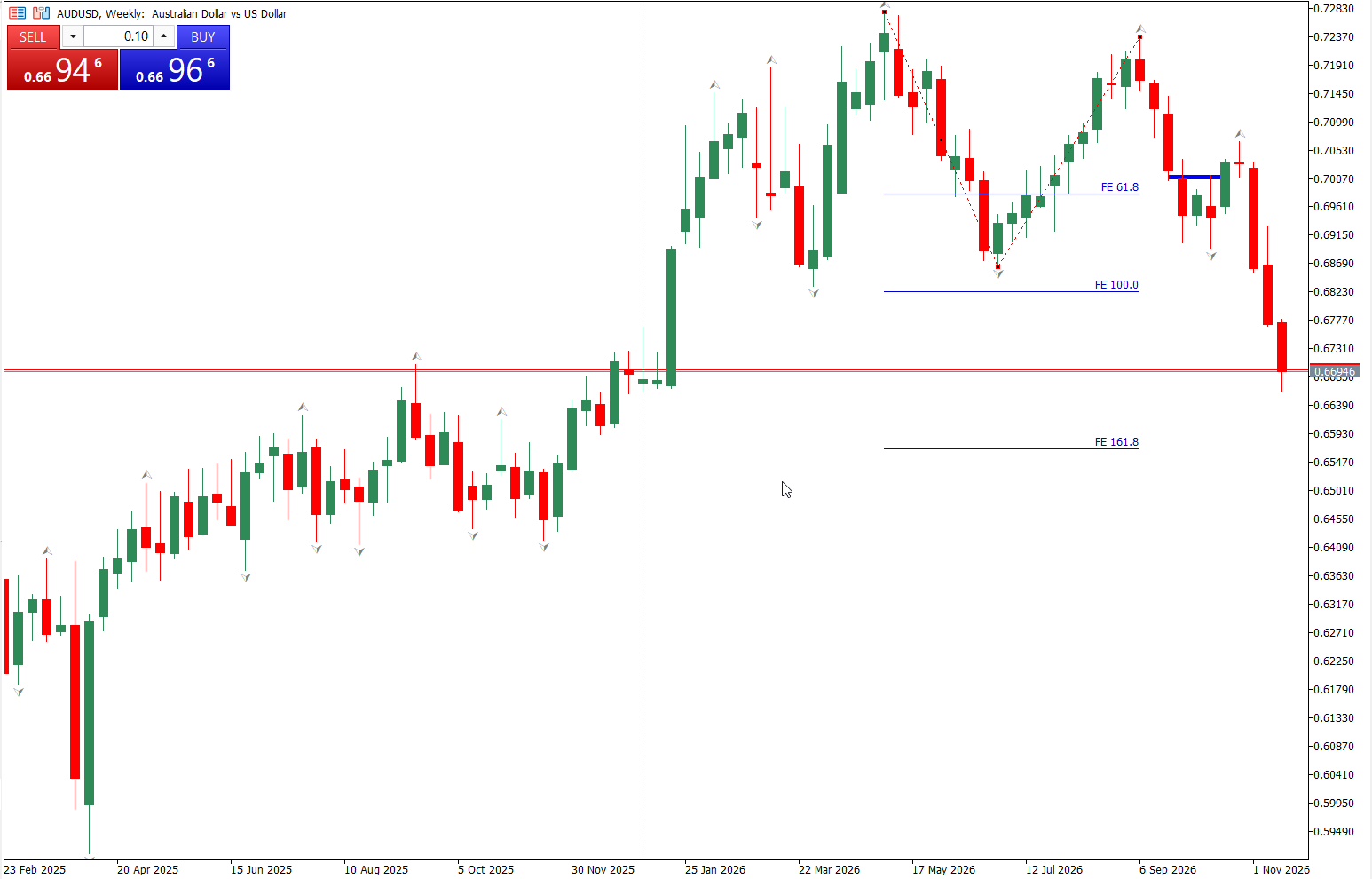
The Australian Dollar has become one of the weakest major currencies following the release of disappointing employment figures.
The Australian Dollar has become one of the weakest major currencies following the release of disappointing employment figures.
Australia's economy unexpectedly lost jobs in October, marking a second consecutive month of declining employment. The unemployment rate also climbed to its highest level in five years.
In response, AUD/USD dropped to approximately 0.6662, erasing its gains for 2026 and reaching its lowest level since late 2025.
The employment figures have reinforced expectations that the Reserve Bank of Australia (RBA) has completed its current interest rate hiking cycle.
Financial markets are now increasingly anticipating a rate reduction during 2027. Traders largely expect the RBA to cut interest rates by August, while market pricing indicates approximately a 40% probability of a 0.25 percentage point reduction as early as May.
This creates a significant contrast with the United States, where investors continue to anticipate further monetary tightening.
The difference between the two central banks' expected policy paths is placing additional pressure on the Australian Dollar, particularly as US bond yields remain comparatively attractive.
However, interest rate expectations are not the currency's only concern.
Australia's economy is closely linked to commodity demand, particularly from China. The recent decline in industrial metals, combined with weaker global equity markets, has therefore contributed to additional selling pressure.
The Australian Dollar has now declined approximately 8% from its September peak and is experiencing its longest consecutive losing streak since July 2024.
While the currency may be approaching technically oversold conditions, a sustained recovery will likely require an improvement in domestic economic data, global risk sentiment or expectations for US monetary policy.
Gold Stabilises Near $3,730 Following Sharp Selloff
Gold is attempting to stabilise after recording another significant decline on Wednesday, when prices fell more than 3% to their lowest level in over a year.
Gold is attempting to stabilise after recording another significant decline on Wednesday, when prices fell more than 3% to their lowest level in over a year.
The precious metal traded around 3,730–3,735 during Thursday's Asian session.
The primary challenge for Gold remains the Federal Reserve's increasingly restrictive monetary policy outlook.
Higher interest rates tend to increase the opportunity cost of holding non-yielding assets such as Gold. At the same time, a stronger US Dollar makes the precious metal more expensive for buyers using other currencies.
These developments have limited Gold's ability to benefit from deteriorating sentiment in global stock markets.
However, investors should also monitor developments in the US bond market.
Despite the Federal Reserve's hawkish stance, Treasury yields have declined as investors reassess the economic outlook. If this develops into a sustained reduction in inflation-adjusted yields, demand for Gold could eventually strengthen.
For now, the metal remains vulnerable to further changes in interest rate expectations.
The $3,700 psychological price level is an area investors may monitor closely. A sustained recovery would likely require stronger safe-haven demand, weaker Dollar momentum or a reduction in expectations for further Federal Reserve tightening.
Copper Rebounds as Investors Reassess AI Spending
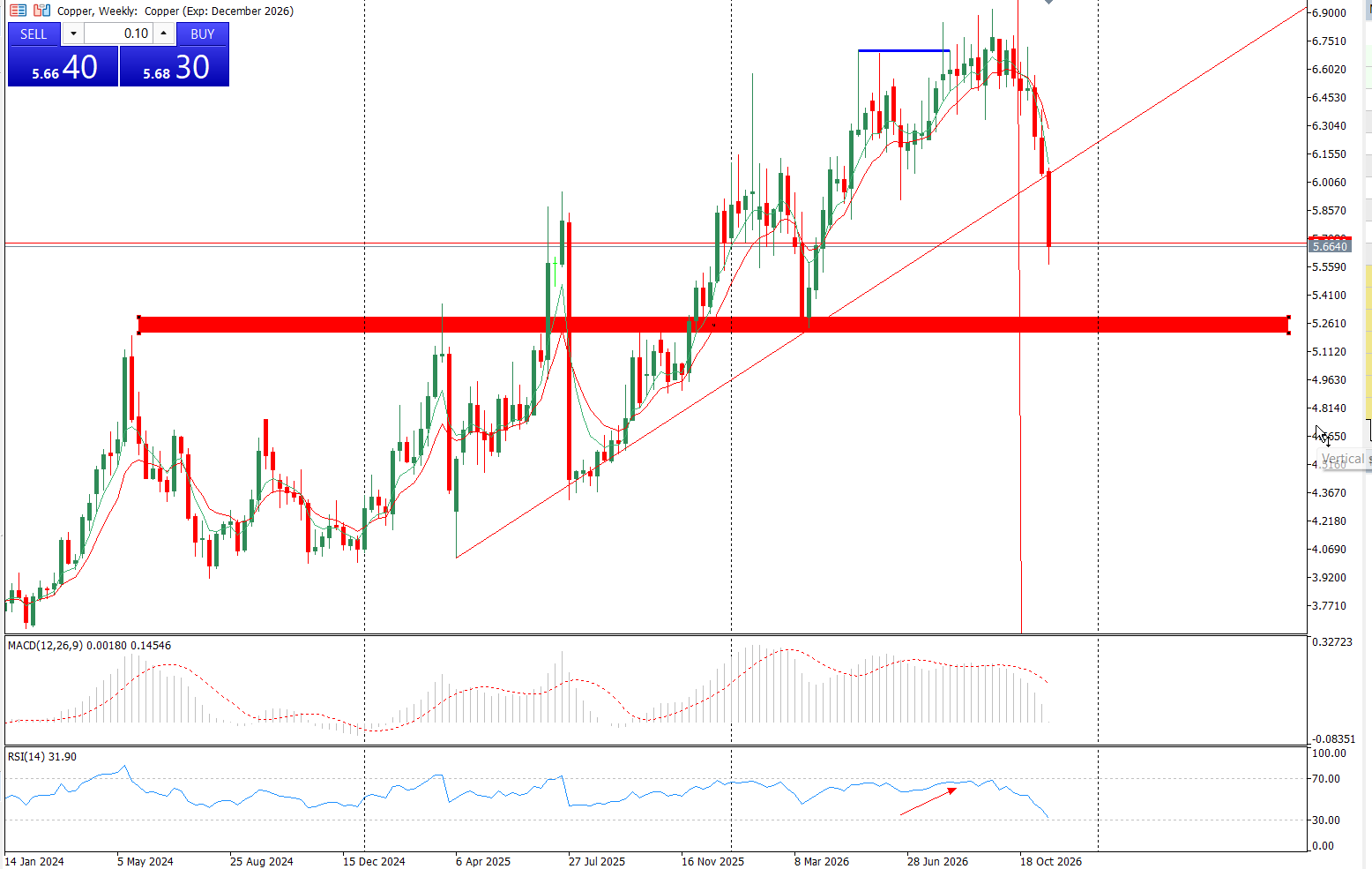
Copper prices are attempting a recovery after suffering their largest daily decline since April 2025.
Copper prices are attempting a recovery after suffering their largest daily decline since April 2025.
The industrial metal plunged almost 6% on Wednesday before recovering modestly during Thursday's Asian session. London Metal Exchange copper prices subsequently traded near $12,560 per tonne, although the metal remains approximately 11% lower for November.
The selloff has been driven partly by investors reducing their exposure to commodities associated with artificial intelligence infrastructure and technological development.
Copper has benefited significantly from expectations of substantial investment in electricity networks, data centres and AI-related infrastructure.
However, growing concerns over the sustainability of technology spending have prompted investors to reassess some of these expectations.
At the same time, reduced speculation surrounding potential US tariffs on refined copper has removed another source of demand.
Nevertheless, physical market conditions present a different picture.
Copper inventories remain tight in several markets outside the United States, particularly China, where supply shortages have supported premiums for immediately available metal.
This creates a divide between short-term speculative activity and longer-term supply fundamentals.
Although copper prices may remain volatile as institutional investors adjust their positions, persistent supply constraints could eventually help stabilise the market.
The outlook will also depend on whether Chinese demand strengthens and whether investment in AI-related infrastructure continues to expand.
Oil Prices Remain Under Pressure Despite Middle East Risks
Oil prices have stabilised following Wednesday's decline, with Brent crude trading near $92 per barrel and West Texas Intermediate around $84.
Oil prices have stabilised following Wednesday's decline, with Brent crude trading near $92 per barrel and West Texas Intermediate around $84.
The market continues to balance two conflicting developments.
On one side, tensions involving the United States and Iran, alongside disruptions to shipping through the Strait of Hormuz, continue to present risks to global energy supplies.
On the other, expectations of a potential oil surplus and weaker economic growth are limiting demand projections.
The recent decline in oil prices could also provide some relief to inflation expectations, particularly if lower energy costs are sustained.
This is significant for the Federal Reserve because a prolonged reduction in energy prices could eventually ease some inflationary pressures.
However, the geopolitical outlook remains uncertain.
Any escalation involving Iran or further disruption to shipping routes could quickly increase concerns over energy supplies and trigger renewed upward pressure on crude oil prices.
Consequently, the outlook for oil remains heavily dependent on developments in the Middle East and the balance between global supply and demand.
Global Market Outlook: Can AI Optimism Overcome Higher Interest Rates?
The current market environment highlights a growing divide between monetary policy expectations and investor confidence.
The current market environment highlights a growing divide between monetary policy expectations and investor confidence.
The Federal Reserve's hawkish outlook continues to support the US Dollar while placing pressure on Gold and other interest-rate-sensitive assets. At the same time, weaker Australian employment figures are strengthening expectations of a policy reversal by the RBA.
Technology stocks face a different challenge.
Investors are increasingly questioning whether the scale of capital invested in artificial intelligence can generate sufficient earnings growth to support current valuations.
Anthropic's IPO provides an immediate opportunity to assess demand for the sector following the recent correction in global technology stocks.
For the remainder of Thursday's trading session, investors are likely to concentrate on Anthropic's market debut, the NASDAQ's ability to sustain its recovery and any further changes in Federal Reserve rate expectations.
A positive performance from Anthropic could help improve market sentiment in the short term. However, a more sustainable recovery across global stock markets may require greater confidence in corporate earnings, economic growth and the future direction of interest rates.
Publication date: