Franc Benefits From Rising Safe-Haven Demand. Forecast as of 23.11.2026
Author Dmitri Demidenko - Reviewed by Jana Kane
Major Takeaways
- Waning risk appetite is supporting the Swiss franc.
- S&P 500 sell-offs are limiting the Fed's room to act.
- Rising inflation is keeping the SNB on alert.
- Short trades can be considered if the price pierces 0.8365.
Weekly Fundamental Forecast for Franc
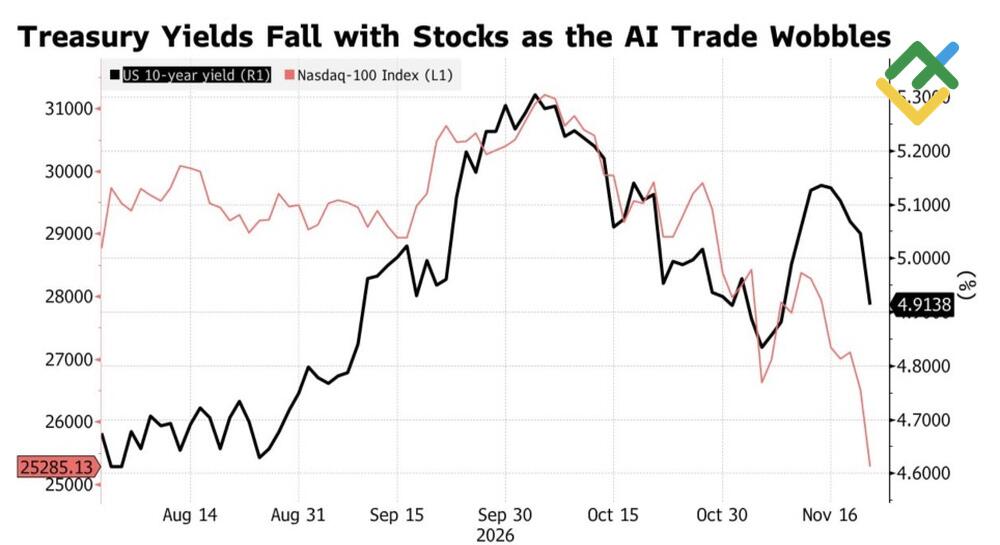
The plunge in US stock indices, the flight to safe-haven assets, and falling Treasury yields have fueled demand for defensive currencies in the Forex market. The yen and Swiss franc have benefited from declining risk appetite and a surge in the VIX volatility index to its highest level in more than a year. The yen's gains have been particularly strong, supported by the BoJ's commitment to tightening monetary policy at a pace comparable to the Fed's. Meanwhile, the Swiss franc is also performing well.
Nasdaq 100 and US Treasury Yields
Source: Bloomberg.
For investors, Switzerland represents a safe haven. Its resilient economy and low debt-to-GDP ratio make the franc an attractive hedge against political, geopolitical, and other risks. This is particularly relevant amid France's budget crisis, mounting public debt and deficits, and the risk of tensions with the EU following the 2027 presidential election.
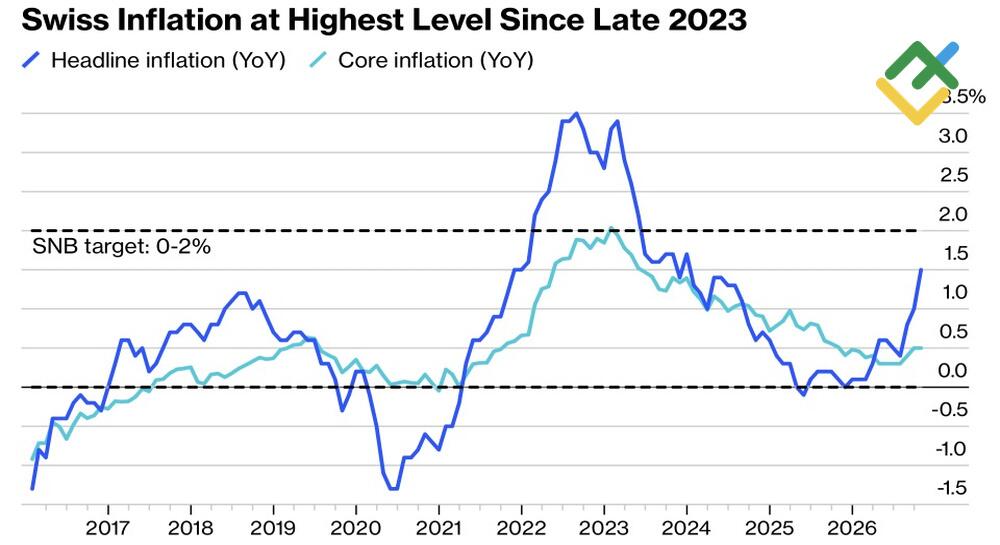
Switzerland's economic stability has allowed SNB officials to note that inflation has remained within the target range since the summer of 2023. However, its acceleration from 1% to 1.5% in October has prompted markets to reassess the outlook for interest rates. This is especially significant given the SNB's forecast that average inflation will reach just 0.7% in 2026.
Swiss Inflation Change
Source: Bloomberg.
Bloomberg analysts expect the SNB to tighten monetary policy in June before pausing until 2028. Derivatives markets are more hawkish, pricing in a 63-basis-point hike by the end of 2027. This implies two rounds of tightening, with some possibility of a third. Meanwhile, the Fed is expected to raise rates by 85 basis points. This divergence in monetary policy paths has fueled the USD/CHF rally. However, the sell-off in US equities is changing the outlook.
Falling stock indices are tightening financial conditions, reducing the need for aggressive Fed action. Even FOMC hawks are backing away from the prospect of a 50-basis-point rate hike in December, despite accelerating inflation. Treasury Secretary Scott Bessent has also warned the central bank against a potential policy mistake. His argument is that financial markets have already done part of the Fed's work, so further tightening could intensify the sell-off in US equities.
If the Fed slows its tightening pace while the SNB accelerates its response to rising inflation, the USD/CHF could face a significant correction, potentially even reversing its uptrend. The risk would increase further if US Treasury yields continue to decline.
Weekly Trading Plan for USD/CHF
There are no signs yet that the pullback in the S&P 500 and Nasdaq 100 is nearing an end. Investors are in no rush to catch falling knives. The USD/CHF pair remains vulnerable to a correction, and a decisive break below the 0.8365 support level could trigger further selling.
Publication date: